When the Hammer Falls: Print Planning for a Highland Charity Auction
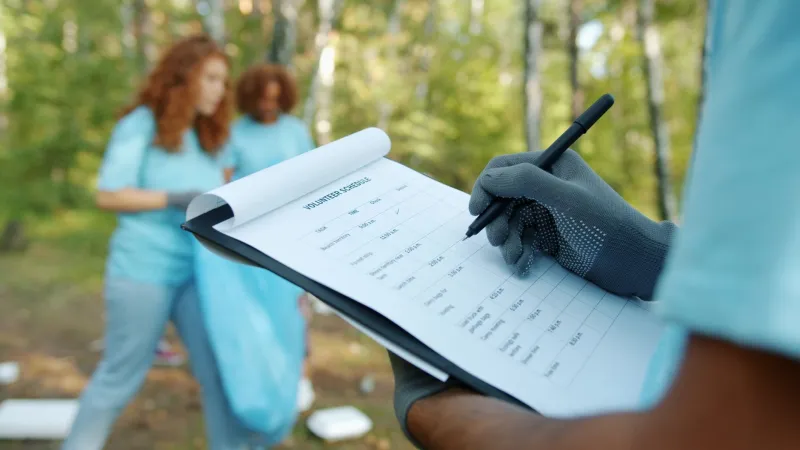
There's a moment in every Highland charity auction when the room turns. The auctioneer has the microphone, the lots are moving, and someone near the back is still flicking through pages trying to work out whether lot 62 is the fly-fishing day or the framed print of the Kessock Bridge. That's the moment your catalogue either earns its keep or gets abandoned under a chair.
Print for a charity auction isn't glamorous work. It's lot numbers, condition notes, bid sheets and a schedule that survives contact with a volunteer committee. But get it right and the catalogue does three jobs at once: it keeps the bidding moving, it gives donors their due, and it goes home with people as a record of the night. Here's how we'd approach it from the print side.
Numbering that survives a noisy room
The single biggest favour you can do an auctioneer is a lot number that's impossible to miss. Bold, large, top corner, same position on every page. Not a decorative script number tucked into a corner, and not a number that changes font halfway through because two volunteers laid out different sections.
Number sequentially through the whole catalogue, not per section. If you split the book into "Experiences", "Home and Garden" and "Lots for the Bairns", keep the numbers running straight through rather than restarting at 1. Restarting is the fastest way to get a bid sheet for lot 14 that could belong to any of three different items.
Leave room beside each number for a short title and a one-line description. Resist the urge to write an essay. In a live room, people read the title, glance at the estimate, and look up at the item. Anything longer than about 40 words per lot will be skipped.
Condition notes without the small print
If a donated item has a scuff, a missing piece or a use-by date, say so plainly next to the lot. "Framed print, slight mark to lower left corner" is honest and protects both the donor and the winning bidder. Bury it in a footnote at the back and you'll spend the following week fielding complaints.
For vouchers and experiences, print the expiry date in the same size as the description. A hotel stay that expires in March is a different lot from one that runs to December, and bidders need to see that before the hammer, not after. If a donor has asked for a restriction — weekends only, not valid in August, collection from Dingwall — put it in the catalogue, not on a sticky note at the front desk.
Bid sheets and the volunteer at the end of the row
Most Highland auctions still run on paper bid sheets clipped to a board, and that's fine. What matters is consistency. Every sheet should carry the lot number, the lot title, the starting bid, and clear ruled lines for name and amount. Print them on a paper that takes a biro without feathering — 120gsm uncoated is a sensible default. Anything shinier and the ink smudges under a thumb.
Print a few spares. Volunteers lose sheets, coffee happens, and someone will always need a replacement for lot 31 at 7.55pm. A dozen extras costs very little and saves an argument.
If you're running a silent section alongside the live auction, keep the two numbering systems completely separate and say so on the first page. "Live lots 1–60. Silent lots S1–S40." It sounds obvious. It is also the most common muddle we see.
Paper, binding and the cost of being too clever
For a catalogue that people will write on and hold open on a chair arm, uncoated or silk paper at 130–150gsm is the practical choice. It takes pencil and pen, it doesn't glare under hall lighting, and it doesn't feel like a brochure for a car showroom.
Saddle-stitching is fine up to about 48 pages. Beyond that, perfect binding gives a spine you can label, which helps when the auctioneer needs to find lot 90 in a hurry. Don't over-engineer the cover. A single strong colour with the event name and date will look better in a church hall than a laminated four-colour photo spread that's been printed slightly too dark.
If budget is tight, cut the page count before you cut the paper weight. A thin catalogue that's easy to handle beats a thick one that flops shut every time someone lets go.
How many do you print?
Start with one per expected bidder, add the auctioneer, the volunteer team, the donors who want a copy, and a modest overspill. As a rule of thumb, take your expected attendance and add 20 per cent. Printing 150 when you expect 120 is sensible. Printing 400 "just in case" is a storeroom problem waiting to happen.
If the event runs annually, keep a dozen copies back for the committee file. They're useful when you're writing thank-you letters in January and can't remember who donated the weekend at Ullapool.
The deadline that isn't the auction date
Work backwards from the night, not forwards from the first committee meeting. Artwork to the printer at least ten working days before the event. A proof back in your hands five working days before. That leaves room for the one lot that arrives late, the sponsor logo that needs resizing, and the inevitable correction to a surname.
Build in a hard cut-off for lot descriptions. Whatever comes in after that date goes on a printed addendum sheet, which is cheaper and calmer than reprinting a whole catalogue.
A record worth keeping
A well-made auction catalogue outlives the night. It lists local businesses, makers, hotels and individuals who gave something, and it sits on kitchen tables for months afterwards. That's worth designing for. Put the donor's name beside every lot, not just in a cramped credits page at the back. Thank them properly in print.
If you're planning an auction in Inverness, Dingwall, Strathpeffer or anywhere across the Highlands and Islands, the conversation about paper, numbering and deadlines is best had early. The hammer falls at a fixed time. The catalogue needs to be ready long before it.