The Drill Comes Back on Tuesday: Paperwork for a Highland Tool Library That Lends Well
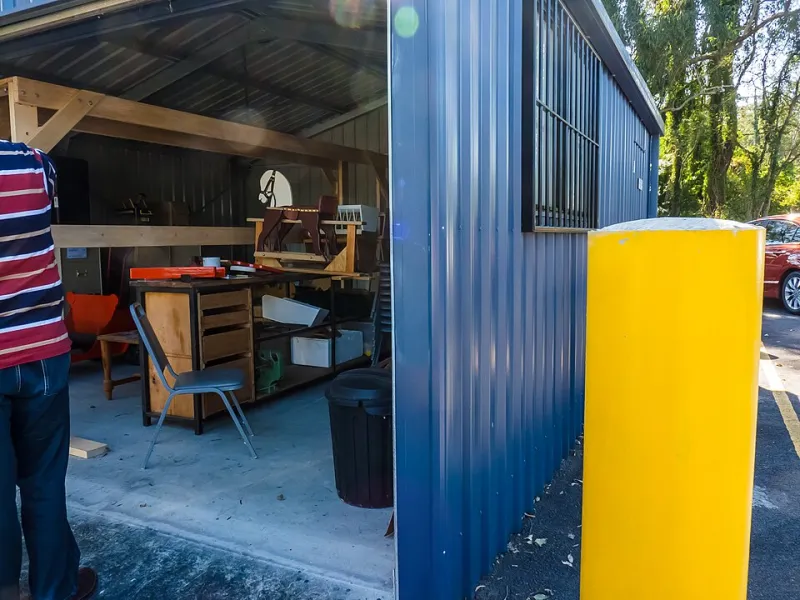
Photo: Farkasbarack, GPL, via Wikimedia Commons
A tool library is a simple idea with a lot of moving parts. Someone donates a mitre saw. Someone else needs it for a weekend. A volunteer opens the shed, finds the right shelf, writes something down, and hopes the whole thing comes back on Tuesday. In a Highland hall or a repurposed container, that hope is usually well founded. But it does not run on goodwill alone. It runs on a small amount of paper doing a very specific job.
Start with the hook, not the database
The temptation with any lending scheme is to build the perfect digital system first. That is fine until the signal drops, the laptop is at home, or the volunteer on duty is not the person who set up the spreadsheet. A printed kit is not a rival to the database. It is the thing that keeps the shed open while the database is somewhere else.
The useful starting point is the physical object. A drill has a name, a shelf, a case, a charger and sometimes a missing chuck key. A ladder has a length and a habit of being borrowed by the same three people. A sewing machine has a foot pedal that must not be lost. Print should attach to those facts, not to an abstract category called “equipment”.
A loan card that works with wet hands
A good loan card is not a receipt. It is a working note. It should have room for the borrower’s name, a phone number, the item, the date out, the date due back, and a short condition line. That last part matters. “Fine” is not useful. “Small crack in the case, works” is useful. It gives the next volunteer something to check and the borrower something to agree with.
Use a card that is big enough to write on when your hands are cold and the pen is the one tied to the clipboard. A5 is generous. A6 is workable if the layout is calm. Laminate the master card, not every loan card, unless you enjoy watching a laminator eat a Tuesday evening. A stack of cards and a cheap clip keeps the system moving.
Shelf labels that answer the question before it is asked
A tool library is a small museum of near-misses. The ladder is not on the shelf because it is out. The drill is not in its case because the case is on the top shelf. The sewing machine is missing its pedal because the pedal is in a drawer with the scissors. Printed shelf labels can head off half of those conversations.
A label should give the item name, a simple number or letter, and one line about what belongs with it. “Ladder, 2.4m — check feet” is better than “Ladder”. “Sewing machine — pedal in drawer 2” saves a search. If the shed is damp, use a label that can be wiped and a marker that does not turn into a grey smudge by November.
Repair tags: tell the truth, briefly
Every tool library has a corner for things that are not quite ready. A broken tag is not a bureaucratic flourish. It is a way of stopping a well-meaning borrower from taking home a drill that will not charge. The tag should be tied to the item, not filed away, and it should carry three things: what is wrong, who reported it, and what happens next. “Charger not working — reported by M — do not lend until PAT checked” is enough.
Colour helps. A red tag for do not lend, a yellow tag for check before lending, a green tag for ready. That is not a complicated system. It is a system that works when the shed is busy and the volunteer has three other people waiting.
The return slip is a handover, not a receipt
When a drill comes back, the volunteer needs to know three things quickly: is it all there, does it work, and does it need cleaning or charging? A return slip with tick boxes is faster than a conversation that starts from scratch. Keep it short. Item, date returned, condition, missing parts, volunteer initials. A line for “next borrower” is useful if there is a waiting list written on the clipboard.
The slip should live with the loan card, not in a separate box. The whole point is that the paper follows the object. If the card is the story of the loan, the return slip is the last page of that story.
Volunteer checklist: one side of A4
A volunteer checklist is not a sign that volunteers cannot be trusted. It is a sign that the shed has a rhythm. Open up, check the diary, put out the clipboard, check the repair corner, note anything missing, lock up. One side of A4, pinned inside the door, saves the same five questions being asked by every new helper.
Keep it practical. If the checklist has more than ten lines, it will be ignored by the second week. If it has a space for “anything odd?” it will earn its place.
What not to print
Do not print a policy document and call it a loan card. Do not print a barcode system if nobody has a scanner. Do not print a forty-page catalogue when the shelf labels already do the work. And do not print a form that asks for information the library will never use. Paper earns its keep by being read at the point of use, not by being filed.
Paper as a low-signal backup
In a Highland shed, the signal is not a guarantee. The paper kit is the low-tech layer that keeps a borrowed ladder moving even when the laptop is offline. It also gives the library something to hand to a new volunteer: a card, a tag, a checklist, a slip. That is not administration for its own sake. It is the quiet paperwork that lets a good local idea keep lending.