Router Bits, Ladder Tags and the Book That Lives on the Bench
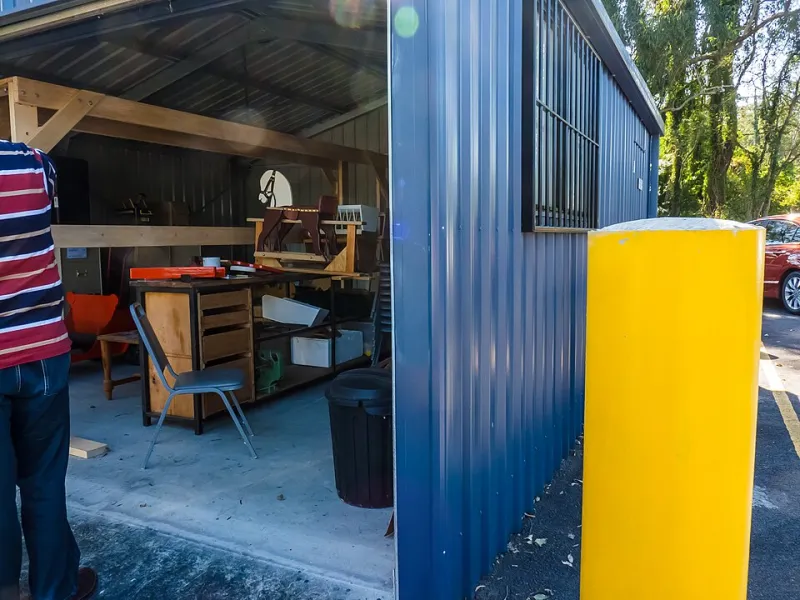
Photo: John Robert McPherson, CC0, via Wikimedia Commons
Walk into a well-run men's shed on the edge of Inverness and you will usually find two things within reach of the kettle: a tin of biscuits and a scuffed A5 booklet with a laminated cover. The booklet is the catalogue. It is not glamorous, it does not sync anywhere, and it is the reason nobody has to shout across the workshop asking where the chuck key has gone.
A community tool library has a particular problem. The stock changes. A ladder goes out on Saturday and comes back on Wednesday. A router bit disappears into a member's apron pocket and reappears a fortnight later. The catalogue has to be accurate enough to be useful, cheap enough to reprint without a funding bid, and tough enough to survive sawdust, tea rings and the occasional drop onto a concrete floor.
Start with the shelf, not the software
Before anyone opens a design programme, walk the shed with a clipboard. Number the bays. Keep the categories plain: measuring, cutting, drilling, sanding, garden, ladders and access, power. Alphabetical order within a bay is fine, but only if the bay itself makes sense to someone who has never been in the building.
The test is simple. Ask a member who has been coming for a month to find a 6mm router bit using only the catalogue. If they head for the right shelf without asking, the structure works. If they wander past the planer and start opening drawers, the index needs another look.
The A5 booklet that can take a knock
A5 portrait is the right size for a shed. It fits in a coat pocket, sits flat on a bench and does not need a table to open. For a tool library with around 150 to 250 items, 24 to 32 pages is usually enough.
Specify a 160gsm uncoated text paper for the inside and a laminated 250gsm cover. Uncoated stock takes pencil notes and does not glare under strip lights. The laminate on the cover is not decoration; it is what stops the booklet turning into a flannel after a fortnight in a damp workshop.
Saddle-stitching keeps the cost down. Print 50 or 60 at a time, not 200. A short run is easier to amend and less painful to bin when the vice is replaced and the old entry becomes a work of fiction. Leave a page at the back for handwritten amendments, and put a printed line on the title page: last updated, and by whom.
Shelf cards, a laminator and a hole punch
Not every member will pick up the booklet. Some will go straight to the shelf. That is where A6 laminated cards earn their keep.
Each bay gets a card: bay number, category, and a short list of what lives there. Add a line that says what to do if an item is missing. Punch a hole in the corner and cable-tie it to the shelf upright. Cable ties survive better than tape, and a laminated card can be wiped with a cloth when it gets oily.
Resist the urge to laminate the master booklet. Laminated pages are stiff, hard to annotate and expensive to replace. Keep the laminate for the things that never change between reprints: bay cards, the shed map, and the sign above the checkout box.
The checkout slip that does not need a database
A tool library does not need software to know who has the ladder. It needs a slip, a pen and a volunteer who checks the box on a Friday.
Use a carbonless duplicate pad or a simple loose-leaf form with these fields: item, member name, date out, date back, initials. Keep the top copy in the box and give the member the second copy if you are using duplicates. A shoebox works. A ring binder works better, because it keeps the slips in date order and makes the weekly reconciliation a ten-minute job rather than a treasure hunt.
The slip should also carry a short note: return clean, report damage, and do not lend the item on to a friend. That last line saves a surprising amount of confusion.
Indexing for people who do not think in spreadsheets
A catalogue fails when it assumes the reader knows the vocabulary. Someone looking for a 'hole saw' may not think to look under 'cutting'. A cross-reference page solves this cheaply.
Add a single page headed 'Where is it?' with the common asks: router bits, see bay 4. Ladder, see bay 9. Extension lead, see the hook by the door. Keep it to one side of A5 and update it with a pen between reprints.
A simple line map of the shed is worth more than a paragraph of description. Draw the bays, number them, and put the map on the inside front cover. It does not need to be to scale. It needs to be recognisable.
A reprint rhythm that keeps up
Accuracy comes from rhythm, not from a perfect first edition. Aim for a quarterly booklet reprint, a monthly check of the shelf cards, and an annual full audit of the tool register. The audit is the moment to retire the entries for tools that have gone and add the ones that have arrived.
Keep a change log on the inside back cover. Three columns: date, page, change. It takes a volunteer two minutes and gives the next editor a fighting chance.
When you reprint, print a few spare copies for the welcome pack and one for the noticeboard folder. Do not print a box that will still be sitting there in three years. The catalogue is a working document, not a monument.
What it costs, and what it saves
A short run of 50 A5 saddle-stitched booklets with a laminated cover typically lands somewhere between 60 and 90 pounds depending on page count and paper. A box of laminating pouches and a packet of cable ties costs less than a replacement router bit. The checkout pads are pennies per slip.
Set against that the volunteer hours lost to searching, the tools that quietly walk, and the ladder that goes missing the week the gutters need clearing, the print bill is modest. It also gives funders something concrete to look at: a catalogue that is used, amended and reprinted is evidence that the shed is being run, not just stocked.
A men's shed on the Black Isle or down by the Caledonian Canal does not need a database. It needs a booklet that lives on the bench, a laminated card on the shelf and a slip in the box. Print it short, amend it often, and let the sawdust settle on the cover.