The Splatter Test: Building a Highland Community Cookbook That Lives by the Hob
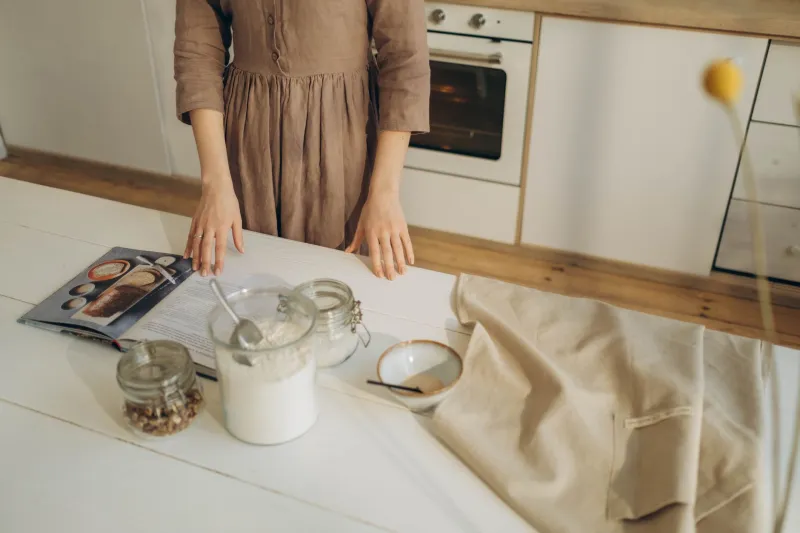
Every community cookbook starts the same way: a bright idea, a stack of handwritten cards, and somebody saying, “We could sell that.” The trouble is that most of them end up as shelf ornaments. They look lovely beside the good china and never get opened, because the first time someone takes one into a real kitchen it flaps shut, takes a greasy thumbprint, and becomes a nuisance. A Highland cookbook can do better. It can be the book that sits by the hob, splattered and dog-eared, with a tea ring on the page for the clootie dumpling.
The difference is not luck. It is a series of small, practical decisions made long before the printer is asked for a quote.
Start with the recipes people actually cook
A call for recipes can go one of two ways. You either get a lovely spread of dishes that nobody makes on a Tuesday, or you get the real stuff: the soup that gets a family through a wet January, the traybake that turns up at every school fair, the venison dish that someone’s grandmother brought from the strath. Aim for the second.
Ask contributors to send the recipe as they cook it, not as they think it should appear in print. A rough note is fine. What matters is detail: pan size, heat level, how long it really takes, what to do when the mixture looks split. A recipe that assumes you already know is not much use to a newcomer. A recipe that says “beat until it looks like porridge, not wallpaper paste” is worth its weight in flour.
Set a simple form, digital or paper, with fields for title, ingredients, method, time, notes and the contributor’s name. If you are collecting from older cooks, a paper form and a kitchen-table visit will beat a web link every time. Take the notes yourself if needed. The voice matters more than the formatting.
Editing is where the book is made
A committee can gather recipes. Editing them is a different job. Someone needs to sit down with the whole pile and make it feel like one book rather than a raffle. That means consistent spellings, sensible measurements, and a clear order: soups and starters, mains, baking, puddings, maybe a section for preserves and a section for things that freeze well.
Do not sand off the local language. If a recipe calls for a handful of oatmeal, a good pinch, or a hot oven, keep it but add a practical note. A glossary at the back can explain terms without making the main page feel like a textbook. If Gaelic names are used, check the spelling with someone who knows. That is not pedantry; it is respect.
Test a handful of recipes if you can. You do not need to cook every dish, but a small testing afternoon will catch the recipe that forgot an ingredient or the cake that only works in a fan oven. It is also a good excuse to get people together.
Paper, binding and the fight against a closing book
The single most useful upgrade for a cookbook is not a glossy cover. It is a binding that lies flat. Perfect binding, the sort that looks like a paperback novel, will fight you every time you need both hands for a bowl. Saddle-stitching is fine for a slim booklet, but a proper community cookbook usually wants wire-o, plastic coil, or a lay-flat PUR option. Ask to see a sample before you commit. Hold it open. Imagine it with floury fingers.
For paper, think wipeable rather than precious. A 150–170gsm silk stock with a matt laminated cover will handle more than a thin uncoated sheet. If the budget allows, a wipe-clean cover is worth it. Internal pages can be a practical uncoated paper for writing notes, but not so thin that a splash of stock goes straight through. If you expect heavy use, ask the printer about a coated internal stock that still takes pen. There is usually a sensible middle ground.
Size matters too. A5 is friendly and cheap to post; A4 gives more room for step-by-step methods. Many groups settle on a compact A5 with a strong cover, because it fits on a crowded counter and into a bag. Whatever you choose, keep the type readable. A cookbook is not a design portfolio.
Sponsors, print runs and the money question
A community cookbook can pay for itself without becoming a corporate brochure. Sponsor pages work best when they are clearly part of the community, not bolted on. A local butcher, a garden centre, a bakery, a hardware shop: these are the names that make sense beside recipes for broth and bannocks. Offer a simple package, keep the layout clean, and print the sponsor list on a page that people will actually see, not buried at the back.
Work out the print run from orders, not from hope. Three hundred is a common starting point for a village or school project. Five hundred can work if you have a clear route to sell them: the Christmas fair, the farm shop till, the community café, the primary school newsletter. Print too many and you will store boxes for years. Print too few and you annoy the people who meant to buy one. Ask for expressions of interest before you order, and add a modest buffer of twenty or thirty copies.
Get a proof. Read it on paper, not just on a screen. Check the page where the method splits awkwardly, the recipe title that runs into the margin, the contributor name that has been spelled two ways. A proof is cheaper than a reprint and far less embarrassing.
Make it feel like it belongs in a Highland kitchen
A good community cookbook is not only a collection of recipes. It is a record of how people eat in a particular place: what is in season, what comes out when someone visits, what gets made in batches when the weather turns. Photographs of messy kitchens, handwritten notes, a few lines about where a recipe came from, all of that helps. But keep the practical page practical. A little story beside a recipe is welcome. A whole memoir above the ingredients is not.
In the end, the test is simple. Does the book stay open on the counter while you reach for the salt? Can you wipe the cover without ruining it? Would a visitor pick it up and find something they actually want to cook? If the answer is yes, you have printed something better than a fundraiser. You have made a kitchen book that will be used until the pages go soft.