The Names Are the Whole Job: Order of Service Printing at Short Notice
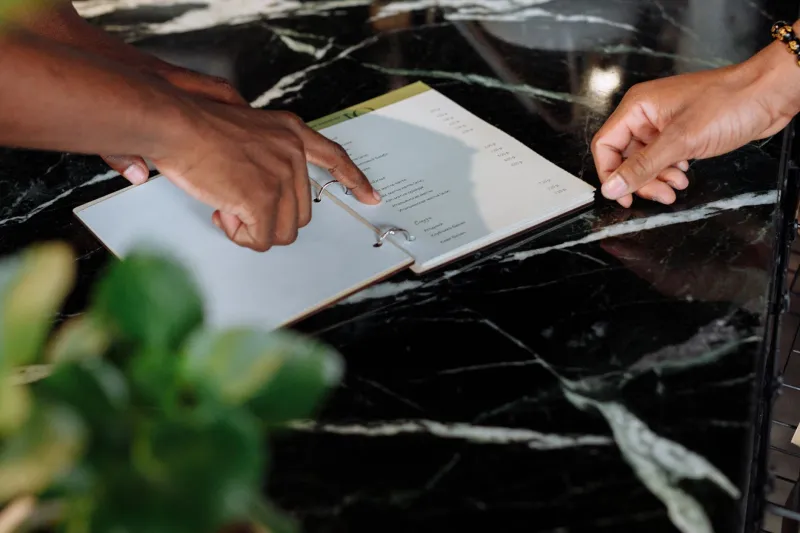
It is not the sort of job you put on a poster. The phone call rarely starts with a request for a quote. It starts with a funeral director, a celebrant or a family member saying that the service is on Thursday and could we possibly help with the booklets. In a Highland winter, Thursday can feel very close indeed.
Order of service printing is ordinary work for a local print shop, but it carries a weight that a menu or a noticeboard poster does not. The booklet in someone's hand at a crematorium or a village kirk is part programme, part keepsake and part map for the next forty minutes. It has to be right. Not perfect in a glossy, designed-to-impress way — just right in the ways that matter.
The call that doesn't follow the usual script
Most print enquiries arrive with a bit of room to manoeuvre. A business wants flyers for an event next month. A community group needs a newsletter before the next meeting. Funeral work is different. The deadline is fixed by circumstance, and the people making decisions are often tired, grieving and doing three things at once.
That changes how we work. We ask fewer open questions and more useful ones. Who is the single point of contact? Has the celebrant seen the final wording? Are there readings, hymn numbers, Gaelic phrases or family names that need particular care? Do you need the booklets delivered to the funeral director, collected from the shop, or taken to the venue?
It also changes the tone of the conversation. Nobody needs a lecture on print specifications when they are trying to remember whether Aunt Effie's name appears before or after the committal. A short, clear checklist is kinder than a long explanation.
Names first, layout second
The single most important part of an order of service is not the cover. It is the names. Family members, readers, pallbearers, the celebrant, the minister, the person giving the eulogy, the charity for donations. Highland families often have wide networks, and the same person may be known by a formal name in one line and a familiar one in another. Both can be correct. Both need checking.
We read the names slowly, aloud where possible, and ask the family to do the same. Spellcheck is no help with Gaelic names and it is no help with the differences between Mac and Mc, or a surname that has drifted over the years. We check the order of the service too: is it a funeral service, a service of thanksgiving, a graveside committal with a shorter booklet? Those are not interchangeable words.
A simple version-control habit saves a lot of grief. One document, one contact, one time. If a reading changes at nine in the evening, we want that change to come from the person who has already been checking the rest of the text, not from three different family members sending three slightly different versions.
Paper that behaves in a cold kirk
A funeral booklet is read in places with poor light and hard chairs. It is held by people wearing coats, sometimes with gloves, sometimes with a handkerchief in the other hand. Glossy paper is the wrong choice. It catches the overhead lights and throws a glare back at the reader. Thin paper feels flimsy and shows the print from the other side.
For most orders of service we steer towards a 100gsm or 120gsm uncoated stock in white or a soft cream. It takes ink well, feels substantial without being stiff, and folds cleanly. A5 is the usual size, printed as a folded A4 sheet or as a stapled booklet depending on the page count. If there are readings and hymns, the booklet needs to sit open in the hand without fighting back.
We also think about the cover. A photograph can be lovely, but it needs to reproduce well. A phone picture taken in a dim room may print muddy. If there is time, we will say so. If there is not, we will do the best we can and keep the image small enough to be kind.
One contact, one version
Short-notice print runs go wrong when decisions are spread across too many people. It is not anyone's fault. Families are trying to be helpful. But helpful can mean five people each sending a correction to a different line of the service.
Our preference is simple. One family member or one funeral director owns the final text. They gather the changes, they approve the proof, and they tell us when to print. We will happily speak to anyone, but we want one person to say yes.
That person also needs to know the numbers. Orders of service are usually printed in modest runs — sixty, eighty, a hundred and twenty. It is worth adding a small overs to the count: a few for the family, a few for the celebrant, a few for people who arrive late or ask for a copy afterwards. The booklet often becomes a keepsake, and running short is a quiet sadness on an already difficult day.
The proofing routine: read it aloud
The best proofing routine for an order of service is not complicated. It is slow. We print a proof on the actual paper, fold it, and read it aloud from start to finish. Reading aloud catches missing words, repeated lines and names that look fine on screen but sound wrong in the mouth.
Then we check the details that screen reading misses. Are the hymn numbers correct? Is the charity name spelled the way the family wants it? Is the date right? Is the celebrant's title right? Does the order of service move logically from welcome to reading to reflection to committal? Is there a page number missing where a reading should be?
We mark corrections in pencil on the proof and keep it beside the job. It is not a glamorous system, but it is a reliable one. When there is no room for error, a routine beats a rush of adrenaline.
Numbers, folds and the last half hour
On the day, the work is physical. The booklets are folded, stapled, stacked and counted. We check the top copy against the approved proof. We wrap them in bundles that are easy to carry and label them clearly. If they are going to a funeral director in Inverness or a church in the Black Isle, we confirm who is collecting and when.
The last half hour is not the time for a new idea. It is the time for counting, checking and handing over. That is the quiet deadline. Nobody claps when the booklets leave the shop. But the family gets a service sheet that does its job, and the names are right. In this line of work, that is the whole job.