A Folded Welcome: The Case for Useful Guest Print in the Highlands
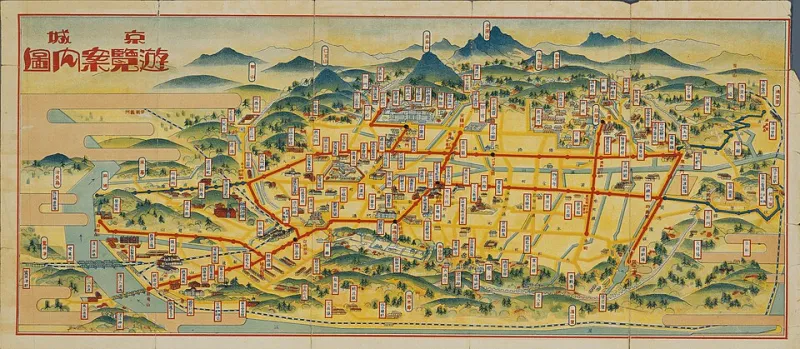
Photo: Unknown authorUnknown author, Public domain, via Wikimedia Commons
Most guesthouses have a cupboard like this: a shelf of glossy brochures, ordered in a flush of January optimism, now curling at the corners. Guests take one, read two pages over breakfast and leave it on the bedside table. The piece of print that actually travels home is often much humbler — a folded map with a hand-written route to the coast, or a slim booklet listing the places that open before nine.
For a Highland B&B, that is the print worth paying attention to. Not because it is cheap, but because it is useful. A take-home map or guest booklet can do three jobs at once: help someone find their way, support the local businesses you recommend, and keep your name in the glovebox long after checkout.
Begin after checkout, not at reception
A brochure usually starts with the property: the history, the rooms, the breakfast, the view. A take-home piece should start with the guest's next move. Where are they going tomorrow? What should they know before they set off? Which cafe is open on a Tuesday in November? Where can they fill a flask or find a cash machine between here and the ferry?
That shift in starting point changes the whole document. You are not producing a sales leaflet with a map on the back. You are producing a small, practical companion that happens to carry your name. The selling is quieter, and it works harder.
The fold decides whether it survives
A lot of print fails at the fold. A clever gatefold looks good in the design proof and becomes a puzzle on the passenger seat. For most Highland guesthouses, simple is better: one A3 sheet folded to A5 gives four clear panels — cover, map, local recommendations, contact details. It fits a jacket pocket or a glovebox and does not demand a table to open.
If you need more room, an eight-page A5 booklet is the next step. Saddle-stitched, with two staples on the spine, is perfectly adequate for a seasonal run. Keep margins generous and type readable. A map needs a clear orientation, a simple scale and enough white space that people can add their own pencil notes. The best guest print looks as if it expects to be used, not framed.
Choose paper for a real Highland week
You do not need to over-specify, but you do need to be realistic. A map that will be folded and unfolded in a car, stuffed into a raincoat pocket and consulted at a damp lay-by should not be printed on the thinnest stock available. A 150–170gsm uncoated or silk sheet is a sensible starting point for a folded map. For a booklet, 130–150gsm silk for the innards and a 250–300gsm cover gives it enough body to survive a week in a walking bag.
Uncoated paper takes pen and highlighter well, which matters if guests want to mark a route or circle a pub. Very glossy stock looks smart on arrival but can smear, glare under a car light and feel like something to throw away. If the piece is likely to be used on coastal walks or in wet weather, ask about a laminated map or a weather-resistant sheet — but only if the budget genuinely allows it. A sturdy uncoated map is usually better than a fancy one that cannot be written on.
Let local advertisers share the load
A take-home map or guest booklet is a natural home for a small block of local advertising. The cafe you already recommend, the taxi firm that knows the back roads, the garage, the outdoor shop, the tour guide who takes small groups. Six to ten modest ads can take the sting out of the print bill without turning the piece into a coupon book.
Keep the editorial side separate from the advertising side. Guests are quick to notice when recommendations feel bought and paid for. A simple directory at the back, or a short strip of local contacts on the map panel, works better than a page of loud boxes. Ask advertisers for a clean logo, a phone number and a line of plain text. Avoid QR-only adverts. If the signal drops, the advert disappears with it.
Do not make the phone do all the work
Highland mobile coverage is patchy, and not every guest wants to spend their holiday staring at a screen. Print the phone numbers, the addresses, the opening times and the simple directions. Use a QR code if you like, but treat it as an extra, not the main event. A map that says turn left after the bridge will still work when the phone is dead.
The same goes for your own booking details. Put your direct phone number and email on the back panel in type that can be read without zooming. A short line such as best time to call, or a note about returning guests, is more useful than a long paragraph. The point is not to recreate your website on paper. The point is to give someone the one or two things they will need when they are out of signal and away from the laptop.
Set a print run that matches your season
A small Highland B&B does not need five thousand copies. If you have four or five rooms and a busy May-to-September stretch, a run of 300–500 maps and 150–250 booklets is often a realistic starting point. Print in spring, keep a few back for late-season enquiries, and reprint only if you run low. Put a version date on the back so you know which batch is which. Do not print five years' worth to save a few pounds per copy. The local cafe will change hands, the road will close, and the booklet will become a small archive of last year's opening times.
A paper proof still matters here. Check the map folds the right way, the text is not too close to the trim, and the local adverts have not crowded out the useful information. A proof on the actual stock tells you more than a screen ever will.
Leave a reason to come back
The back panel is the quietest and most important part of the piece. Your name, your contact details, a short note about the best time to return, maybe a simple line about booking direct. Nothing complicated. The guest may not read it on the day they leave. They might find it in the glovebox three months later, while planning another trip north.
That is why the useful souvenir beats the expensive brochure. A glossy folder may impress for a moment. A folded map that helped someone find a beach, a lunch stop and a road home tends to stay. If you are planning next season's print, start with the piece your guest will actually carry. Torna Press Inverness is always happy to talk through folds, paper and realistic runs before anything goes on press.